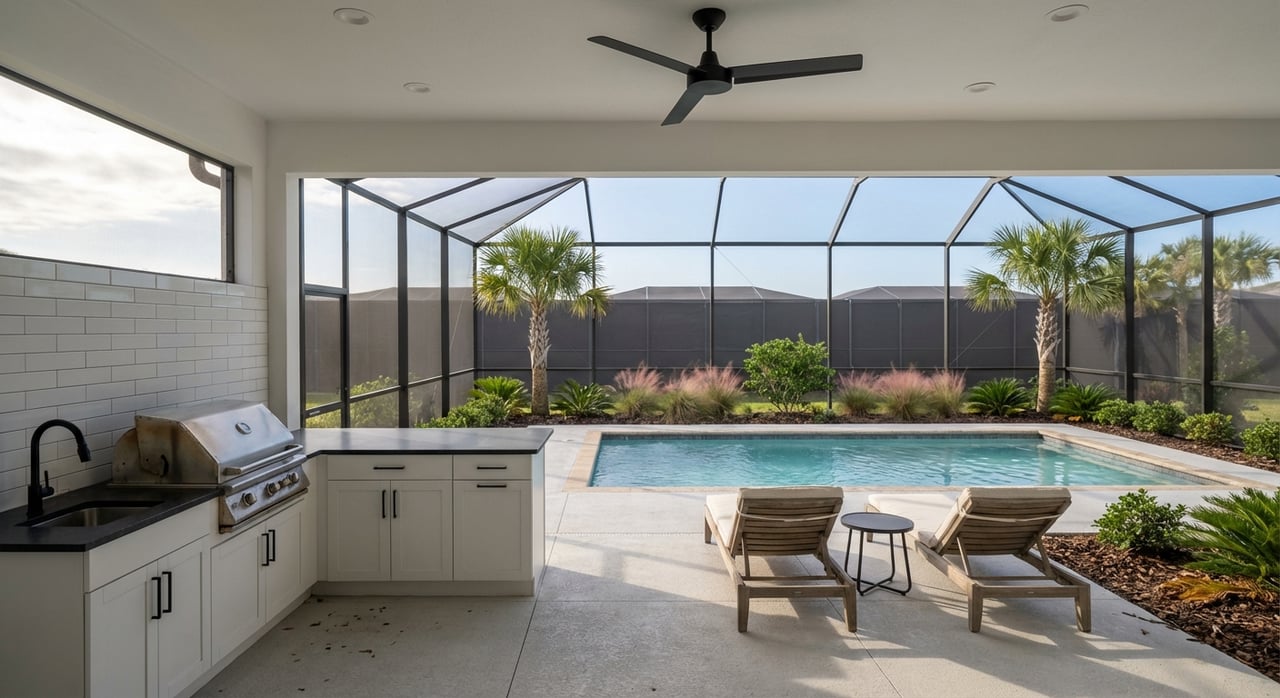
Wish your backyard felt like an extra room you can enjoy most of the year? In Jacksonville, heat, humidity, storms, and salt air shape what works outdoors and what wears out fast. With the right design and materials, you can add shade, comfort, and value without adding headaches. In this guide, you’ll learn climate-smart ideas for lanais, pools, summer kitchens, and landscaping, plus permitting, safety, and insurance tips tailored to Duval County. Let’s dive in.
Jacksonville climate sets the plan
Jacksonville’s humid subtropical climate brings long, hot summers, mild winters, and about 53 inches of rain each year. That means you need shade, ventilation, and good drainage to make outdoor spaces comfortable and durable. See local temperature and rainfall patterns in the FSU Climate Center’s Jacksonville normals.
Hurricane season runs from June 1 through November 30, with peak activity from mid-August to October. That six-month window calls for storm-ready design, including secure furnishings, impact protection for openings, and water management. Get the official timeline from the National Hurricane Center.
Coastal neighborhoods and riverfront areas experience more salt spray, which accelerates corrosion. Even several miles inland, severe storms can carry salty air that shortens the life of metals. Coastal guidance recommends corrosion-resistant specifications for connectors, hardware, and exposed metal. Review FEMA’s coastal best practices in the Coastal Construction Manual.
Covered lanais and screened porches
Why they work in Northeast Florida
Covered and screened spaces extend your living area, add insect protection, and make hot days more comfortable. They also give you a sheltered zone by a pool or summer kitchen, which boosts the number of usable days each year.
Smart specs for comfort and longevity
To manage humidity and reduce mold risk, plan for airflow. Ceiling fans, ridge or soffit ventilation, and operable screens or windows help move air. In coastal or near-coastal settings, use powder-coated aluminum framing and marine-grade fasteners, and choose UV- and insect-resistant screens. If the space connects to a pool, confirm that doors, gates, or enclosures meet pool-barrier rules before you build.
Resale appeal
In Florida, a well-designed screened lanai often reads like another room, which buyers value. Keep the finishes clean and low maintenance so the space shows as turnkey rather than a future project.
Pools that fit Jacksonville living
Types and cost context
You’ll find concrete or gunite, shotcrete, and fiberglass pools across Duval County. Custom concrete builds typically start in the tens of thousands and rise with size, features, decking, and automation. For a realistic number, request a site-specific bid from a local builder and review options like those outlined by a Jacksonville-area pool contractor.
Climate-smart pool design
Plan shade for the deck or tanning ledge, and consider a heat pump or solar heating if you want to extend shoulder seasons. Heavy summer rainfall calls for robust overflow and drainage, with pumps and filters on elevated pads that stay above ponding water. Store chemicals out of direct sun and rain. Saltwater chlorination can reduce chlorine odor, but it does not eliminate corrosion concerns for nearby metal fixtures.
Safety and code basics
Florida law requires each new residential pool to include at least one approved safety feature, such as a barrier, safety cover, exit alarms, or self-closing and self-latching devices. Minimum barrier heights and gate rules also apply, and local inspectors verify compliance at final inspection. Review the Residential Swimming Pool Safety Act in Florida Statute Chapter 515.
Ownership and resale notes
Pools increase utility and maintenance costs and can affect insurance. At resale, a clean, modern system with clear safety features shows best, while an older or neglected pool can deter buyers. If you are considering a pool for value, focus on condition, compliance, and low-maintenance systems.
Summer kitchens and grilling zones
Popular features
A Northeast Florida favorite is a summer kitchen under a covered lanai, often near the pool. Common features include a built-in gas or propane grill, counter space, a small refrigerator, a sink, storage, and covered seating so you can cook and entertain year-round.
Safety, permits, and inspections
Hard-piped gas lines and permanent outdoor kitchen installations usually require permits and inspections, and must follow fuel gas codes. Always hire a licensed gas contractor and confirm permit requirements before starting. Learn practical safety and inspection basics from this overview on gas line safety and permits.
Materials and layout for durability
Keep grills away from combustible finishes, plan splash protection behind cooktops, and design counters and cabinets with corrosion-resistant finishes. In salt-air zones, stainless steel faces and fixtures perform better, and service points for gas, electrical, and water should be accessible for maintenance.
Low-maintenance coastal landscaping
A plant palette that thrives
Choose salt-tolerant, heat-tough, and pest-resistant species that stay attractive with fewer inputs once established. Proven options for Northeast Florida include sabal palm, live oak, muhly grass, coontie, yaupon holly, firebush, and other native groundcovers and shrubs. See the University of Florida’s list of salt-tolerant plants for coastal sites.
Lawns and turf alternatives
St. Augustine grass is common, but it needs consistent care in our climate. Depending on your yard’s sun and soil, you might consider zoysia or hybrid Bermuda in suitable microclimates, or low-maintenance synthetic turf if allowed by your HOA. Match irrigation to plant needs to reduce disease in high humidity.
Drainage and storm readiness
Direct runoff away from structures and pool decks, and use mulches and planting beds that tolerate heavy summer rains. A thoughtful grading plan prevents puddling and protects your lanai, kitchen, and equipment areas.
Materials that last in sun, salt, and humidity
Metals and fasteners
For exposed railings, hardware, and fixtures near the coast, marine-grade 316 or 316L stainless resists pitting and staining better than 304. If stainless is out of budget, specify hot-dip galvanized connectors rated for coastal use, and understand they may have a shorter lifespan than 316 stainless. Get a quick comparison of 304 vs. 316 performance in this guide to stainless steel grades.
Decking and paving
Porcelain pavers, sealed natural stone, high-quality concrete pavers, and capped composite decking handle wet zones well. Choose slip-resistant finishes around pools and avoid untreated softwoods in splash areas that stay damp.
Furniture and fabrics
Look for solution-dyed acrylics or performance fabrics made for UV and mildew resistance, paired with powder-coated aluminum frames or stainless hardware. After storms, a quick fresh-water rinse removes salt residue and prolongs the life of metalwork and fabrics.
Mechanical and pool equipment
Place pumps, filters, and heaters above expected flood levels on secure pads. Plan access for service technicians, allow for ventilation, and design drainage for condensate and rain to move away from equipment areas.
Permits, insurance, and resale in Duval County
City permits and inspections
The City of Jacksonville issues permits and conducts inspections for in-ground pools, structural lanais, gas lines, and many outdoor alterations. Confirm requirements through the city’s JAXEPICS system and the Building Inspection Division before work begins. Review inspection contacts and steps on the City of Jacksonville site.
Wind mitigation and insurance savings
Florida insurers offer wind-mitigation credits that can reduce the wind portion of your premium when features like impact-rated opening protection and improved roof-to-wall connectors are verified. A certified wind-mitigation inspection uses the OIR-B1-1802 form to document savings, and programs like My Safe Florida Home may help fund upgrades. Find qualified inspectors and program details through Citizens Property Insurance.
Balanced view on resale value
Outdoor living upgrades are popular with Jacksonville buyers, but return on investment depends on condition, neighborhood expectations, and maintenance. A clean, safe, and low-maintenance presentation typically attracts more interest than a space that looks custom to one owner’s taste or overdue for repairs.
Your step-by-step planning checklist
Site and climate scan
- Note sun angles, prevailing winds, and drainage. Check for FEMA flood-zone implications and plan for hurricanes. In coastal areas, plan for salt exposure and secure storage.
Program and budget
- Prioritize safety features for pools and gates, durable materials like 316 stainless in salt air, and a low-maintenance plant palette. Get multiple bids and ask for local references.
Permits and inspections
- Confirm whether you need building, plumbing, electrical, mechanical, or gas permits through the City of Jacksonville. Submit plans for in-ground pools, structural lanais, and hard-piped gas.
Insurance and mitigation
- Schedule a wind-mitigation inspection before or after upgrades to document potential credits. Consider impact protection for openings to improve storm performance and possibly reduce premiums.
Maintenance plan
- Rinse and inspect metalwork at least annually in coastal settings. Check pool equipment quarterly. Refresh mulch and adjust irrigation as plants establish. Use licensed pros for gas and electrical work.
Ready to design your outdoor living?
If you want an outdoor space that looks great, holds up in Florida weather, and supports resale, the details matter. From choosing the right materials to confirming permits and insurance credits, a little planning goes a long way. For neighborhood-specific guidance and a clear plan to add value, reach out to Amy Wojaczyk. Let’s Connect.
FAQs
Will a pool add value to my Jacksonville home?
- In Florida, pools increase buyer appeal, but value depends on neighborhood expectations, pool condition, safety compliance, and maintenance costs, so review local comps before deciding.
Do I need a permit for an outdoor kitchen or gas line in Duval County?
- Permanent gas piping and built-in appliances usually require permits and inspections, and you should hire a licensed gas contractor; portable grills may be subject to HOA rules.
What plants handle salt, heat, and humidity near Jacksonville beaches?
- Native and Florida-friendly options like sabal palm, live oak, muhly grass, coontie, yaupon holly, and firebush are proven choices that need fewer inputs once established.
How should I choose metals for a coastal deck or railing?
- Use 316 or 316L stainless for exposed hardware in salt air, pair with powder-coated aluminum where appropriate, and avoid plain 304 stainless or uncoated metals in splash zones.
When is the best time to build outdoor upgrades in Jacksonville?
- Many homeowners target late fall through spring to avoid peak hurricane months; you can build year-round, but plan for summer rain and secure materials during the June to November season.
Do screen enclosures count as a pool barrier under Florida law?
- A screen enclosure can meet the requirement only if it matches all barrier specifications; confirm details with your contractor and the city during permitting to ensure compliance.