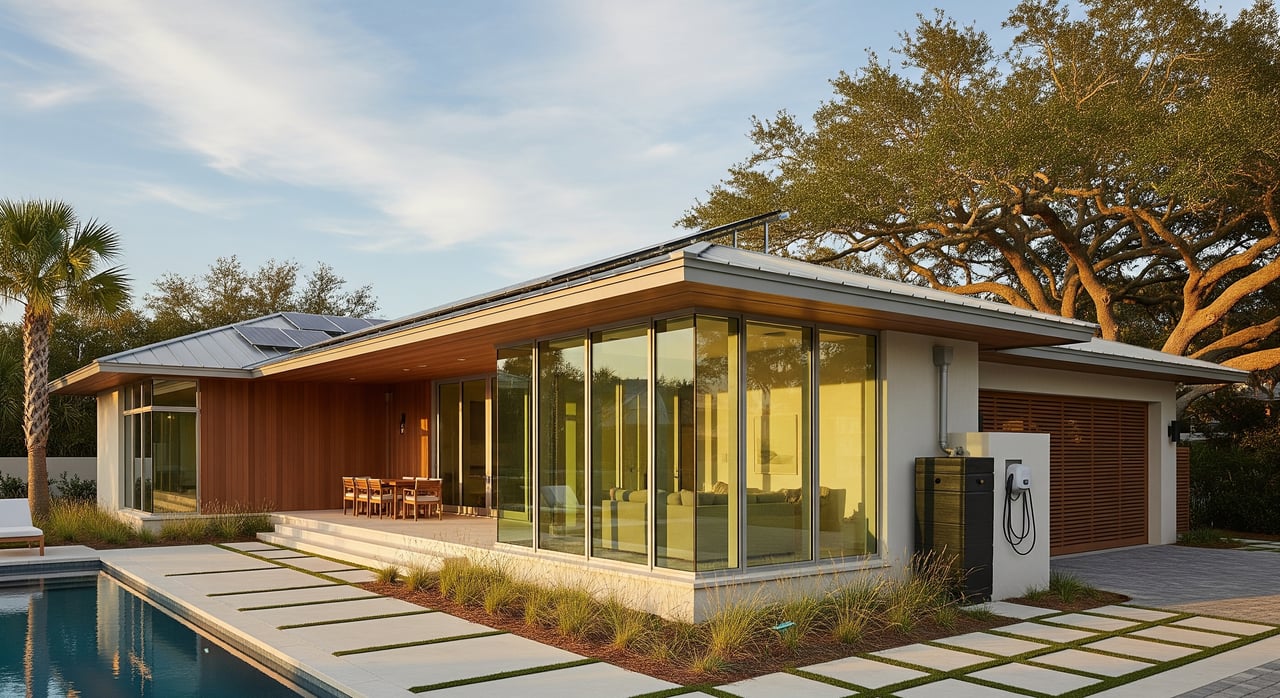
Hot, humid summers are a way of life in Jacksonville, and your home’s energy performance either works with the climate or fights it. If you have ever cranked the AC and still felt sticky, you know comfort is about more than temperature. In our coastal environment, the features that control heat and moisture make the biggest difference in bills and day-to-day comfort. This guide shows you which upgrades matter most in Duval County, how to shop for them, and how to highlight them when you sell. Let’s dive in.
Why efficiency matters here
Jacksonville’s subtropical climate brings long, hot, humid summers and mild winters. That means most of your electricity goes to cooling and dehumidification, not heating. Salt air and heavy storms near the river and coast add wear to exterior materials and mechanicals. Features that cut cooling load, control moisture, and resist corrosion deliver the best value.
Start with HVAC and ducts
Right-size the system
Your AC is the biggest lever on comfort and cost. Higher SEER or SEER2 ratings mean more cooling per unit of electricity, so upgrading from an older unit to a modern high-efficiency system can reduce bills. Proper sizing is critical in humid climates. Ask for a Manual J load calculation and Manual D duct design so the system runs long enough to remove moisture without short cycling.
Control humidity
Moisture control is as important as temperature. Variable-speed systems run longer at low speed to pull more humidity out of the air. A dedicated whole-house dehumidifier can help if the home is tight or has tricky moisture loads. Avoid oversizing the AC, which can leave indoor air clammy and drive up energy use.
Smart thermostats that help
Smart thermostats support scheduling and remote control, which can trim waste. In hot-humid homes, avoid aggressive temperature setbacks that let humidity spike and force long recovery cycles. Look for humidity-aware settings or integrate with a whole-house dehumidifier.
Coastal-ready installation
Near the coast, choose corrosion-resistant coils, coil coatings, and stainless or protected fasteners. Elevate outdoor units where flood risks apply. Plan for routine maintenance, including coil cleaning, filter changes, and refrigerant checks to preserve efficiency.
Seal the envelope and attic
Add attic insulation
Attics drive much of the heat gain in summer. Increasing attic insulation and sealing attic bypasses lowers cooling load and runtime. Check current Florida Building Code guidance and local utility programs for recommended R-values and upgrade options.
Air seal the gaps
Seal around recessed lights, attic hatches, plumbing and electrical penetrations, and other leaks. Reducing infiltration keeps hot, humid air and salt-laden air out, which protects finishes and helps prevent mold.
Smarter attic strategies
Two common paths work well here. A ventilated attic with high R-value insulation and a tight air barrier is cost-effective. A sealed, conditioned attic reduces duct losses if your ducts are in the attic. Radiant barriers or reflective roof sheathing can reduce attic heat gain in our climate.
Walls that handle moisture
Aim for continuous air and moisture control across the building shell. Correct insulation with a proper air barrier helps prevent condensation inside wall cavities and supports long-term durability.
Windows and doors that pull weight
Impact-rated protection
Many wind-borne debris zones in Duval County require impact protection or shutters. Impact windows and doors also tighten up the shell, reduce air leakage, and can improve comfort. They may contribute to insurance discounts, but always confirm with your carrier.
Low-e glass with right SHGC
Low-e coatings reduce solar heat gain. Prioritize lower Solar Heat Gain Coefficient (SHGC) for west- and south-facing windows to cut cooling load while keeping good daylight. U-factor affects insulation value, but SHGC is the bigger play in hot climates.
Frames and weatherstripping
Vinyl or fiberglass frames resist corrosion better than bare aluminum in coastal environments. Quality weatherstripping and insulated door cores reduce infiltration and help your HVAC system keep up on the hottest days.
Roofing and exterior that last
Cool roof options
Light-colored roofing, reflective coatings, and cool-roof membranes absorb less heat. In hot climates this reduces attic temperatures and can modestly lower cooling needs.
Coastal-grade materials
Fiber cement siding, marine-grade stainless fasteners, and high-durability exterior coatings hold up better to salt air. These choices help maintain a tight envelope and reduce long-term maintenance.
Keep water out
Strong storms demand robust water management. Proper flashing, a continuous water-resistive barrier, and attention to roof penetrations help prevent leaks that lead to mold or insulation damage.
Water heating, appliances, and pools
Heat pump water heaters
Heat pump water heaters are much more efficient than standard electric tanks and perform well in warm climates. They are a practical way to trim energy use with manageable up-front cost.
Efficient appliances and LEDs
ENERGY STAR appliances and LED lighting cut everyday electricity use. If you have a pool, energy-efficient choices matter even more.
Pool equipment that saves
Variable-speed pool pumps use far less energy than single-speed models. Covers help reduce heat loss and pump runtime, which lowers operating costs.
Solar and batteries in Jacksonville
Why solar pencils out
Jacksonville has strong solar resource and high cooling loads, so solar can offset a big share of your electric use. Review roof orientation, shading, and remaining roof life before you install.
Net metering and incentives
Check local utility programs for net metering or buyback policies and review federal and state incentives. Batteries can add storm resilience, though they increase up-front cost.
Coastal-ready mounting
Use corrosion-resistant racking and hardware and plan for periodic washing to remove salt deposits. Proper siting and maintenance protect long-term output.
Coastal care, codes, and insurance
Choose corrosion-resistant parts
For exterior decks, rails, roofs, and HVAC, look for stainless or coated fasteners and hardware. Coil coatings and marine-rated materials extend life in salt air.
Manage moisture and mold
A controlled ventilation strategy works better than uncontrolled air leaks. In many hot-humid homes, humidity control through right-sized HVAC and dehumidification is the primary tool. Crawlspaces benefit from proper vapor barriers and drainage, and encapsulation is often effective.
Permits and zones to verify
Florida Building Code includes requirements for energy conservation and wind-borne debris regions. The City of Jacksonville and Duval County set permitting for HVAC, windows, roofing, and solar. Confirm flood zones and elevation requirements before major work.
Insurance and resale
Impact-rated openings and fortified roofing can lower risk and may reduce premiums. Keep receipts, permits, ratings, and maintenance records. Clear documentation builds buyer confidence and supports resale value.
Costs and payback basics
Every home is different, but these ballpark notes can help you plan:
- New central AC: ranges widely based on efficiency, size, and ductwork. Replacing older units and ducts can reach the low tens of thousands. Higher-SEER systems cost more up front but save more in hot climates.
- Impact windows and doors: significant investments that often span several thousand to tens of thousands depending on openings and home size.
- Attic insulation and air sealing: typically one of the most cost-effective upgrades in cooling-dominated climates. Costs depend on attic size and approach.
- Solar PV: substantial up front with long-term savings. Incentives and local programs can reduce net cost.
- Heat pump water heaters and efficient appliances: mid-range costs with solid paybacks in warm climates.
Costs vary by contractor, permitting, roof access, and market conditions. Get multiple quotes and ask for equipment specifications, load calcs, and warranty details.
Buyer and seller checklists
MLS keywords that matter
Include or search for:
- Impact windows, impact doors, hurricane-rated
- New HVAC, high-SEER, SEER, energy efficient
- Energy Star, solar, net metering, battery backup
- Heat pump water heater, tankless water heater
- Spray foam insulation, attic insulation, conditioned attic, radiant barrier
- HERS rating, coated HVAC coil, stainless fasteners, salt-resistant
Documents to request
- Manual J and Manual D from HVAC contractors
- Equipment spec sheets for SEER and HSPF
- Maintenance records and permits for HVAC, windows, roofing, and solar
- HERS or Energy Star documentation
- Warranty transfers for windows, roof, and solar
- Appliance manuals and model info
Questions to ask
- When was the HVAC installed, what are the SEER/SEER2 and HSPF ratings, and where are the ducts located?
- Are windows and doors impact-rated, and are there permits or certificates of occupancy for those upgrades?
- Is the property in a flood or wind-borne debris zone with additional requirements?
- Are there utility bills or other documentation showing energy savings?
- For solar: system size, ownership or lease, net metering terms, production history, and warranties.
On-site checklist
- Look for insulated, sealed ducts and adequate attic insulation
- Check for a whole-house dehumidifier or variable-speed HVAC components
- Inspect window and door labels for impact ratings
- Review exterior coatings, fasteners, and signs of salt wear
- Note HVAC condensate management and any signs of moisture or mold
- Find the solar inverter, labeling, and accessible shutoffs if present
Make your move with local guidance
In Jacksonville, the upgrades that control heat and humidity are the ones that pay off. A right-sized high-efficiency HVAC, tighter attic and envelope, impact-rated openings, and coastal-ready materials improve comfort, reduce risk, and boost resale appeal. If you are buying, use the checklists above to compare homes. If you are selling, document your upgrades and bring them forward in your marketing.
If you want a strategy tailored to your home, neighborhood, and budget, reach out to a local expert who knows how these features play in the 904 market. Let’s connect to plan your next move and maximize value with the right improvements. Contact Amy Wojaczyk.
FAQs
What energy-efficient upgrades matter most in Jacksonville homes?
- Focus on high-efficiency, right-sized HVAC with good ducts, stronger attic insulation and air sealing, impact-rated low-e windows and doors, and humidity control.
How does humidity change how I size and run my AC?
- Oversized systems short cycle and remove less moisture. Ask for Manual J sizing and consider variable-speed equipment or a whole-house dehumidifier.
Do impact windows save energy or only help in storms?
- They provide storm protection and can reduce air leakage and solar heat gain, which improves comfort and may trim cooling costs.
Are heat pump water heaters a good fit for Northeast Florida?
- Yes. They perform very efficiently in warm climates and are a practical way to lower electricity use for hot water.
Is solar worth it in Jacksonville’s climate?
- With strong sun and high cooling loads, solar often pencils out. Check roof orientation, shading, roof age, and local utility buyback policies before installing.
What permits and codes apply to windows, HVAC, or solar in Duval County?
- Florida Building Code governs energy and wind requirements, and the City of Jacksonville handles permits. Verify wind-borne debris and flood zone rules before upgrades.